

Zero trust is more than a buzzword
Zero Trust is often dismissed as marketing fluff, but the logic is straightforward: stop trusting users just because they're on your office Wi-Fi. Traditional security builds a wall around the office and assumes everyone inside is a 'good guy.' Zero Trust assumes the opposite. Every connection attempt is treated as a potential threat until proven otherwise.
Why is this change necessary? Simply put, the old ways aren’t cutting it anymore. Remote work is commonplace, cloud adoption is accelerating, and attackers are becoming increasingly sophisticated. A breach in one area of a traditionally secured network can easily compromise the entire system. The Department of Defense’s Zero Trust Implementation Guideline Primer and NIST’s Zero Trust Architecture publications both highlight the need to move away from implicit trust.
The key concepts of Zero Trust revolve around least privilege access – granting users only the access they need to perform their jobs – and continuous verification. This means constantly authenticating and authorizing users and devices, and monitoring their activity for suspicious behavior. Microsegmentation, breaking down the network into smaller, isolated segments, is another critical element. It limits the "blast radius" of a potential breach.
Zero Trust isn't about eliminating trust entirely, it's about never trusting implicitly. It’s a process of continuous assessment and authorization, built on the principle that compromise is inevitable, and therefore systems must be designed to minimize the impact of a successful attack.
Finding your weak spots
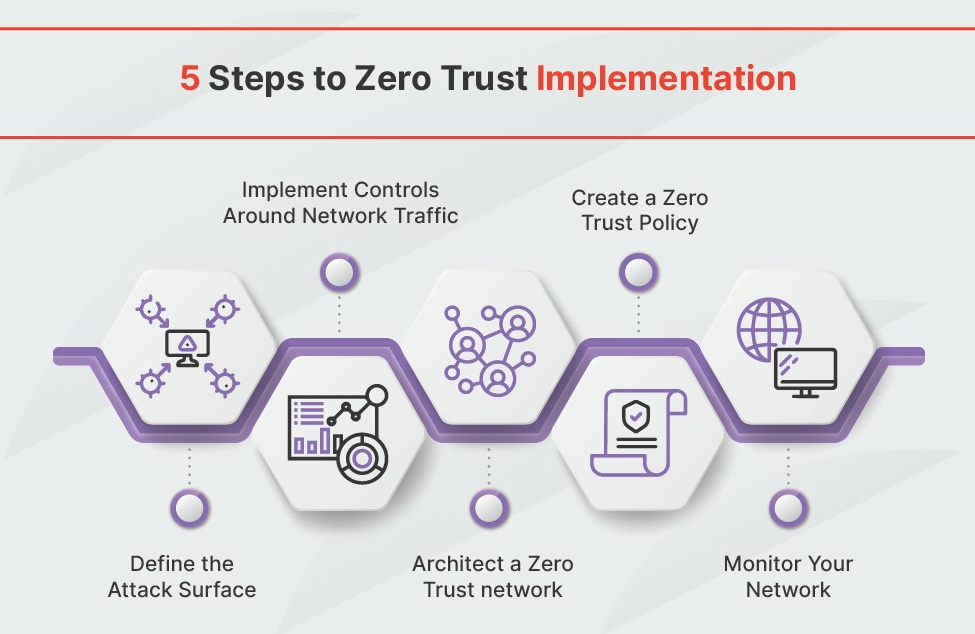
Before jumping into implementation, small and medium-sized businesses (SMBs) need a realistic assessment of their current security landscape. This isn’t about finding flaws to dwell on, but identifying where your biggest risks lie and prioritizing efforts accordingly. Start by identifying your most critical data assets – what information would cause the most damage if compromised? Think customer data, financial records, intellectual property, and anything subject to regulatory compliance.
Many SMBs struggle with basic security hygiene. Outdated firewalls, weak or reused passwords, and a lack of multi-factor authentication (MFA) are unfortunately common. Limited visibility into network traffic is another frequent problem. Without proper monitoring, it’s difficult to detect and respond to threats effectively. Consider a vulnerability scan to get a baseline understanding of your external exposure.
Don’t overlook the impact of "shadow IT" – the use of unauthorized hardware or software by employees. This can create significant security holes, as these systems often lack proper security controls and are outside the purview of IT management. A simple inventory of all devices connecting to your network is a good starting point. Talking to department heads can reveal usage of unsanctioned apps.
Be honest about your capabilities. Do you have the internal expertise to manage a Zero Trust implementation? If not, you’ll likely need to partner with a managed security service provider (MSSP). A clear understanding of your current state is essential for developing a realistic and effective Zero Trust strategy. It’s easy to get overwhelmed, so focus on the most impactful areas first.
- Identify which specific databases or customer files would bankrupt the company if leaked.
- Scan for Vulnerabilities: Use tools to assess your external exposure.
- Inventory Devices: Know what's connecting to your network.
- Assess Shadow IT: Discover unauthorized hardware and software.
Identity and Access Management (IAM) Foundations
Identity and Access Management (IAM) is absolutely fundamental to a Zero Trust architecture. If you don't know who is accessing your network and what they're allowed to do, you can’t enforce least privilege or continuous verification. Strong authentication is the first step. Multi-factor authentication (MFA) – requiring users to provide multiple forms of identification – is no longer optional; it’s a necessity.
Role-based access control (RBAC) is another key component. Instead of granting individual users specific permissions, RBAC assigns permissions based on their job role. This simplifies management and reduces the risk of accidental or malicious over-provisioning of access. Privileged Access Management (PAM) goes a step further, focusing on controlling access to highly sensitive accounts with elevated privileges.
Managing identities across multiple cloud services can be a real headache for SMBs. Each service often has its own identity provider (IdP), leading to password fatigue and potential security vulnerabilities. Consider using a centralized IdP, such as Okta, Azure Active Directory, or Google Workspace Identity, to streamline identity management and enforce consistent security policies.
Implementing IAM isn’t always easy. User resistance to MFA is common, so clear communication and training are essential. Integrating IAM systems with existing applications can also be complex. However, the benefits – improved security, reduced risk, and simplified management – far outweigh the challenges. A well-implemented IAM system is the bedrock of a successful Zero Trust strategy.
Microsegmentation: stopping the spread
Microsegmentation is the practice of dividing a network into small, isolated segments, each with its own security policies. This limits the lateral movement of attackers within the network, containing the blast radius of a potential breach. Unlike traditional network segmentation, which often divides networks based on broad categories like departments or functions, microsegmentation operates at a much more granular level.
The importance of microsegmentation stems from the fact that most breaches don't originate from outside the network. They start with a compromised user or device inside the network. By limiting an attacker’s ability to move laterally, microsegmentation prevents them from accessing critical assets. It’s like building firewalls within your network.
There are several approaches to microsegmentation. Network-based microsegmentation uses virtual LANs (VLANs) or software-defined networking (SDN) to create isolated network segments. Host-based microsegmentation uses firewalls or other security agents on individual servers or endpoints. Application-based microsegmentation focuses on isolating individual applications or workloads. Zero Networks offers a platform focused on radically simple segmentation.
For SMBs, the practical considerations are cost and complexity. Implementing microsegmentation can be expensive and time-consuming, especially if you’re relying on traditional networking equipment. Software-defined networking (SDN) can simplify microsegmentation by providing a centralized management platform. However, SDN also introduces its own complexities. Prioritize microsegmenting your most critical assets first, and consider starting with a pilot project to gain experience.
- Network-based: Uses VLANs or SDN.
- Host-based: Uses firewalls on endpoints.
- Isolate individual applications so a bug in your HR portal doesn't expose your financial software.
Microsegmentation Approach Comparison for SMBs (2026)
| Approach | Cost | Complexity | Scalability | Visibility | Suitable SMB Environment |
|---|---|---|---|---|---|
| Network-Based | Generally lower initial cost | Moderate - requires network infrastructure expertise | Good, but can become challenging with dynamic environments | Provides broad network-level visibility | SMBs with relatively static network configurations and limited in-house security expertise. |
| Host-Based | Moderate - cost dependent on endpoint protection solutions | High - requires agent deployment and management on each endpoint | Good - scales with the number of endpoints, but management overhead increases | Detailed visibility into endpoint activity | SMBs with strong endpoint management capabilities and a need for granular control over individual devices. |
| Application-Based | Potentially higher initial cost, particularly with specialized solutions | Very High - requires deep understanding of application dependencies and communication flows | Excellent - designed for dynamic environments and supports rapid scaling | Highly granular visibility into application-level interactions | SMBs with complex application landscapes, DevOps practices, and a dedicated security team. |
| Hybrid (Network & Host) | Moderate to High - combines costs of both approaches | High - requires coordination between network and endpoint security teams | Very Good - leverages the strengths of both approaches for improved scalability | Comprehensive visibility across network and endpoints | SMBs needing a balance between network-level control and endpoint-specific security. |
| Hybrid (Host & Application) | Moderate to High - cost dependent on application security tooling | Very High - demands significant expertise in both endpoint and application security | Excellent - offers fine-grained control and scalability for complex environments | Deep visibility into application behavior on endpoints | SMBs with a focus on securing critical applications and protecting sensitive data at the endpoint. |
| Software-Defined Perimeter (SDP) | Moderate to High - often subscription-based | Moderate to High - requires configuration and integration with existing identity providers | Good - designed for scalability and remote access control | Provides visibility into authorized access attempts | SMBs with a remote workforce and a need to secure access to internal resources. |
Illustrative comparison based on the article research brief. Verify current pricing, limits, and product details in the official docs before relying on it.
Continuous Monitoring and Threat Detection
Zero Trust isn’t a "set it and forget it" solution. Continuous monitoring, logging, and threat detection are essential for identifying and responding to attacks in real time. You need to constantly monitor network traffic, user behavior, and system logs for suspicious activity. This requires a robust security information and event management (SIEM) system.
A SIEM system collects and analyzes security data from various sources, providing a centralized view of your security posture. It can help you detect anomalies, identify potential threats, and automate incident response. However, SIEM systems can be complex to configure and manage, and generating useful alerts requires careful tuning.
User and Entity Behavior Analytics (UEBA) is a related technology that uses machine learning to detect anomalous behavior by users and devices. UEBA can identify threats that might be missed by traditional signature-based detection methods. By establishing a baseline of normal behavior, UEBA can flag deviations that could indicate a compromise.
Effective continuous monitoring requires dedicated resources and expertise. Many SMBs choose to outsource this function to a managed security service provider (MSSP). Regardless of your approach, remember that the goal is to detect and respond to threats as quickly as possible, minimizing the impact of a successful attack.
Zero Trust for Remote Access
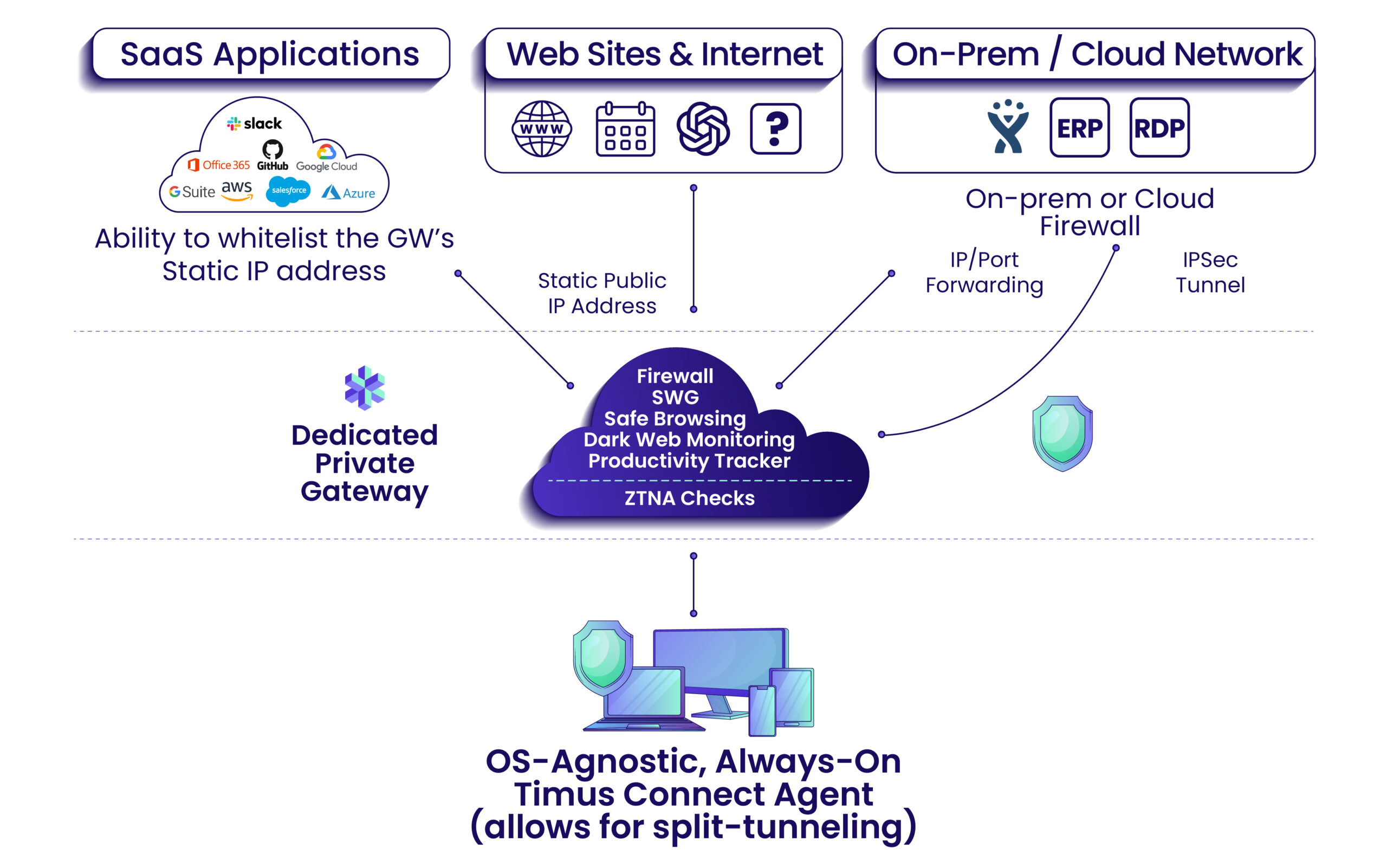
Remote access is a major security risk, especially in a Zero Trust world. Traditional VPNs, while providing encryption, often grant users broad network access once authenticated, essentially recreating the perimeter-based trust model. This can allow an attacker who compromises a remote user’s credentials to move laterally within the network.
Zero Trust Network Access (ZTNA) is a more secure alternative to traditional VPNs. ZTNA solutions provide granular access control based on user identity, device posture, and application context. Users are only granted access to the specific applications they need, and access is continuously verified. It’s a far more restrictive and secure approach.
Device posture assessment is a crucial component of ZTNA. Before granting access, ZTNA solutions assess the security posture of the device attempting to connect – is the operating system up to date? Is antivirus software installed and running? Is the device encrypted? Only devices that meet certain security criteria are granted access.
ZTNA solutions often integrate with identity providers (IdPs) and other security tools, providing a seamless and secure remote access experience. While VPNs still have a place in some scenarios, ZTNA is the preferred approach for securing remote access in a Zero Trust environment. Solutions like those offered by Zscaler are gaining traction.
- Assess Device Posture: Check OS updates, antivirus, and encryption.
- Implement ZTNA: Use solutions for granular access control.
- Integrate with IdPs: Streamline authentication and authorization.
Implementation Challenges and Prioritization
Implementing Zero Trust isn’t a simple undertaking. Cost, complexity, and a lack of internal expertise are common obstacles for SMBs. It’s easy to get overwhelmed by the scope of the project and become paralyzed by analysis. A phased approach is essential. Don't try to boil the ocean.
Start with your most critical assets and vulnerabilities. What data is most sensitive? What systems are most exposed? Focus your initial efforts on protecting those areas. Quick wins can build momentum and demonstrate the value of Zero Trust to stakeholders. Implementing MFA for all users is a good starting point.
Prioritize identity and access management (IAM) as a first step. A strong IAM foundation is essential for all other Zero Trust initiatives. Then, focus on microsegmentation, starting with your most critical applications and workloads. Continuous monitoring and threat detection should be implemented alongside these other measures.
Don’t be afraid to seek help from a managed security service provider (MSSP). They can provide the expertise and resources you need to implement and manage a Zero Trust architecture effectively. Remember, Zero Trust is a journey, not a destination. Continuous improvement and adaptation are key.


No comments yet. Be the first to share your thoughts!